
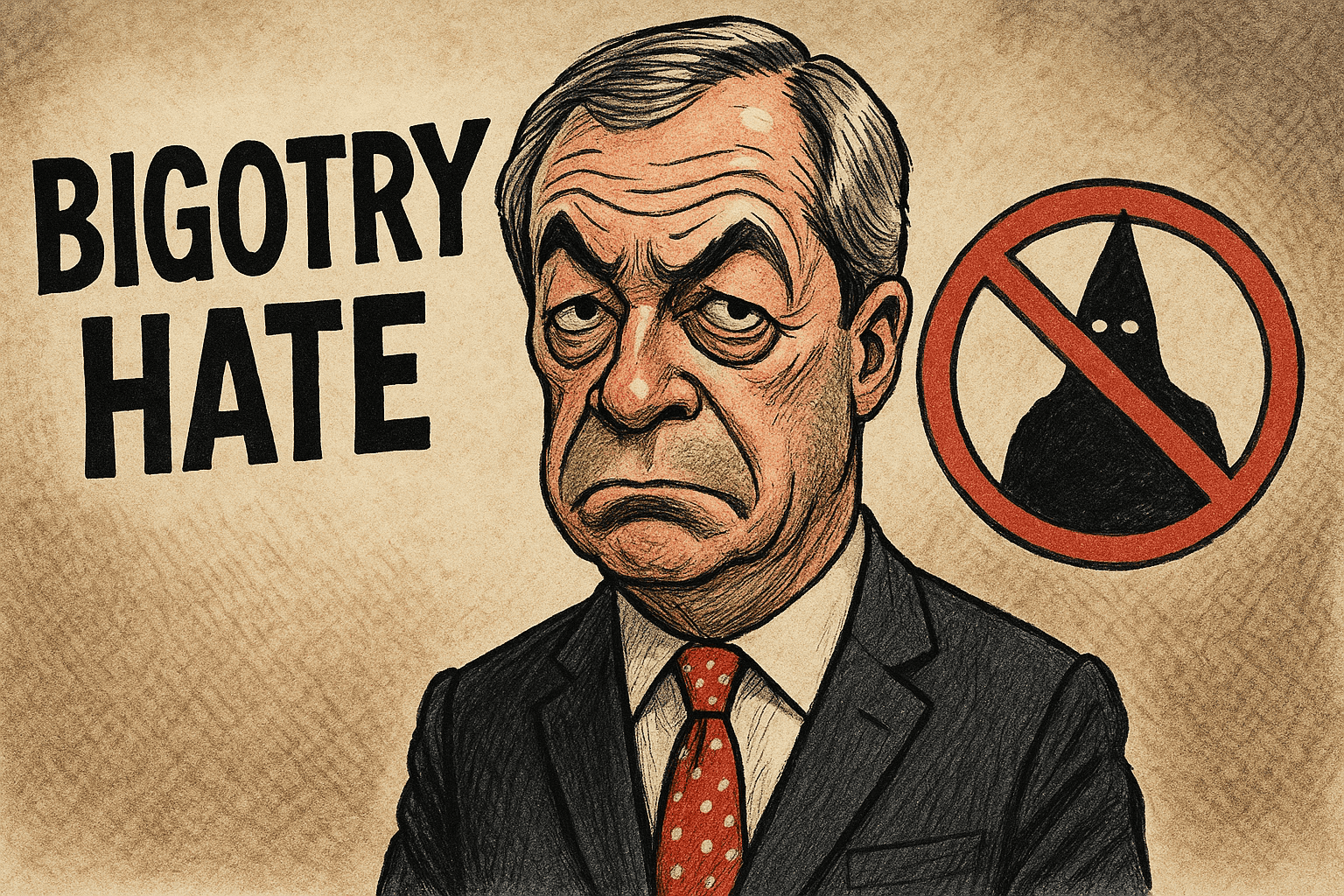
Nigel Farage: Racism and Bigotry
Overview
Nigel Farage has faced persistent accusations of racism and bigotry throughout his public life. His rhetoric on immigration, multiculturalism and national identity has shaped national debate for more than a decade, while also attracting strong criticism from civil rights groups, journalists and political opponents. Farage denies being racist and argues that he is addressing issues others are unwilling to confront.
In 2025, a major wave of new allegations from former pupils and teachers at Dulwich College transformed this area of scrutiny into one of the most prominent controversies surrounding Farage. This page summarises the key claims, verified facts and public reactions relating to Farage’s statements and conduct on race and immigration.
Last updated: 10 December 2025
School Racism and Antisemitism Allegations
In 2025, allegations dating back to Farage’s school years at Dulwich College resurfaced and became a leading national story. More than twenty former pupils and teachers came forward publicly to describe a pattern of racist and antisemitic behaviour during Farage’s time at the school in the early 1980s.
Witnesses alleged that Farage used racist insults toward Black pupils, made antisemitic remarks about Jewish classmates, and on some occasions referenced Nazi themes in ways that caused serious concern among teachers. One former pupil alleges Farage said “that is the way back to Africa” to him. Others described chants, slurs and behaviour they regarded as intimidating and targeted.
Farage rejected these accounts and said he never used racist language with malice. He described aspects of the behaviour attributed to him as schoolboy banter and argued the allegations were being revived for political reasons. The claims have not been subject to formal investigation, but the volume of testimony and its consistency have placed the issue at the centre of media debate.
Holocaust survivor groups and anti racism organisations have called on Farage to address the allegations more directly, while supporters argue that events from four decades ago are being misrepresented and weaponised.
See: Nigel Farage made racist and antisemitic remarks while at school (Farage Exposed fact check)
Immigration Rhetoric
Farage’s political career has been built around strong messaging on immigration. His campaigns frequently present immigration as a cause of cultural strain, economic pressure or national decline.
- The 2016 “Breaking Point” poster used imagery of refugees to argue that immigration had reached an unsustainable level. The poster was widely condemned as racist and compared to far right propaganda.
- As leader of Reform UK, Farage has repeatedly claimed that asylum seekers are linked to rising crime and social disorder.
- Critics argue that his language inflames prejudice and simplifies a complex policy issue. Supporters counter that he is highlighting problems others ignore.
Farage’s framing has contributed to a significant shift in British political discourse, especially around asylum and border control.
False or Unsupported Claims About Migrants
Farage has made several statements about migrants that have been proven inaccurate or lacking evidence.
Sexual offence claims
In 2025, Farage suggested that foreign nationals were disproportionately responsible for sexual offences. Independent analysis showed the claim was based on incomplete and misleading comparisons.
See: Foreigners more likely than Britons to commit sexual offences? (Farage Exposed fact check)
Claims about swans and carp
Farage stated that migrants were catching and eating swans and carp in parks. Royal Parks officials confirmed there was no evidence for this and local authorities denied such incidents were occurring.
See: Migrants eating swans and carp (Farage Exposed fact check)
Crime Narratives Involving Migrants
Farage frequently uses crime statistics to link irregular migration to criminality, but several claims have collapsed under scrutiny.
In July 2025, he said people arriving illegally were 24 times more likely to end up in prison. Analysis showed the claim relied on incomparable datasets and lacked the population context required to make such a comparison meaningful.
Public and Media Reaction
Responses to Farage’s rhetoric and behaviour form a sharply divided landscape.
- Civil rights organisations describe his statements as divisive and rooted in harmful stereotypes.
- News outlets have both challenged and amplified his claims, sometimes without full context.
- Supporters argue he is speaking hard truths about immigration and national identity.
- Critics argue his messaging normalises prejudice and misrepresents official data.
The resurgence of the Dulwich allegations has intensified this debate, prompting renewed focus on Farage’s long term attitudes toward race and the extent to which his public rhetoric reflects earlier patterns of behaviour.
Sources
The Guardian
BBC News
Migration Observatory, Oxford
ONS Crime in England and Wales
Full Fact analysis of asylum seeker crime claims
Full Fact analysis of the “24 times more likely” claim
Royal Parks statements to the media
Ministry of Justice Offender Management Statistics
Farage Exposed fact checking hub
Conclusion
Accusations of racism and bigotry have followed Farage throughout his career, from school age allegations of racist and antisemitic behaviour to more recent claims about migrants, asylum seekers and crime. Farage insists he is not racist and rejects the allegations, but independent analysis repeatedly shows that many of his statements are unsupported by evidence. The resurgence of the Dulwich allegations in 2025 has shifted the conversation and made questions about his past conduct a central part of public debate.
Explore the Fact Checking Hub for a full archive of Farage’s statements and verdicts.